
Life Is a Dream (La vida es sueno): A Reading Guide for Spanish Learners
La vida es sueno by Pedro Calderon de la Barca is the most quoted play in the Spanish language. Written in 1635, it asks a question that philosophy still hasn't settled: if you can't tell the difference between waking life and a dream, does free will exist?
That question produced the most famous monologue in Spanish theater. Segismundo's "Que es la vida? Un frenesi..." is memorized by students across every Spanish-speaking country. There are 636 million Spanish speakers in the world (Instituto Cervantes, 2025). Ask any of them about La vida es sueno and they'll recognize it instantly. It's Spain's Hamlet — except it's about determinism, not revenge.
This guide gives you actual adapted excerpts to read right now, breaks down the plot and philosophy, and maps out exactly how to read the play at your CEFR level.
TL;DR: La vida es sueno (1635) by Calderon is the most famous play in Spanish literature. It explores free will vs. determinism through a prince imprisoned since birth. The original is verse drama at C2 level, but adapted versions start at A1. A meta-analysis found extensive reading produces an effect size of d=1.48 (Nakanishi, TESOL Quarterly, 2015). Start at your level.
Over 70,000 learners use Eppika to build reading habits with adapted books — real bestsellers matched to your level, with tap-to-translate and audio built in.
Find your reading level →Read It Now: Segismundo's Monologue (Adapted)
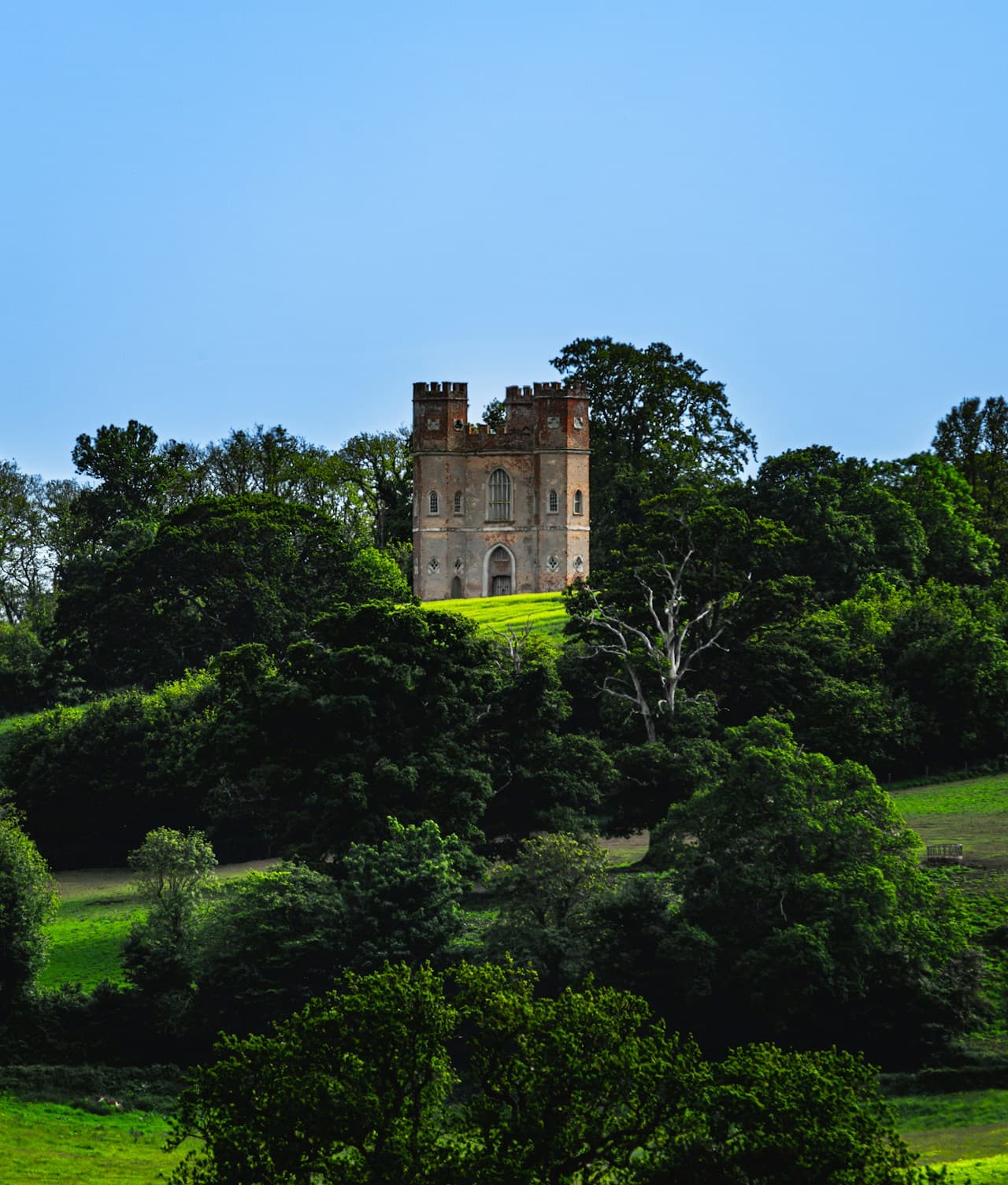
Before we get into the background, read this. It's the most famous speech in Spanish theater — Segismundo, chained in a tower since birth, asking what life even is. This is the Elementary adaptation:
Segismundo, alone in the tower (Elementary / A1-A2)
Yo soy un hombre que vive en una torre. No puedo salir. Hay cadenas en mis manos y en mis pies. No entiendo por que estoy aqui. Cada dia miro las estrellas por la ventana. Los pajaros son libres. Los animales son libres. El agua del rio es libre. Pero yo no. Que es la vida? Yo no se. Mi vida es como un sueno. Un sueno triste y largo. No se si estoy dormido o despierto. Solo se que quiero ser libre.
That's 82 words of Spanish. If you understood most of it, you're ready to read the adapted version. If you caught maybe half, the tap-to-translate feature fills in the gaps in real time.
Now here's what makes adapted reading powerful — the same passage scales with your level:
The same passage at three levels:
Elementary (A1-A2) — Simple present tense, basic vocabulary, short sentences:
Yo soy un hombre que vive en una torre. No puedo salir. Hay cadenas en mis manos y en mis pies. No entiendo por que estoy aqui. Cada dia miro las estrellas por la ventana. Los pajaros son libres. Los animales son libres. El agua del rio es libre. Pero yo no. Que es la vida? Yo no se. Mi vida es como un sueno. Un sueno triste y largo. No se si estoy dormido o despierto. Solo se que quiero ser libre.
Intermediate (B1-B2) — Past tenses, subjunctive mood, richer vocabulary:
He vivido toda mi vida encerrado en esta torre oscura. Las cadenas me sujetan como si fuera un criminal, pero nadie me ha dicho cual fue mi crimen. Cada noche observo las estrellas desde mi pequena ventana y me pregunto que hice para merecer este castigo. Los pajaros vuelan adonde quieren. Los arroyos corren hacia el mar sin que nadie los detenga. Hasta las fieras del bosque van y vienen con libertad. Entonces, que es la vida? Quiza no sea mas que un frenesi, una ilusion. Sueno que estoy despierto, pero tal vez todo es mentira. Lo unico que se con certeza es que quiero — necesito — ser libre.
Advanced (C1) — Near-literary register, extended subjunctive, philosophical depth:
Desde que tengo memoria, estas paredes han sido mi unico horizonte y estas cadenas mi unica compania. Ignoro que delito cometio mi existencia para que el cielo me condenara al nacer. Contemplo cada noche las constelaciones que giran sobre mi torre y me atormenta una pregunta que no hallo como responder: si el pajaro surca los aires sin pedir licencia, si el arroyo serpentea entre las piedras sin que fuerza alguna lo aprisione, si la fiera recorre los montes obedeciendo solo a su instinto — entonces yo, que tengo mas alma, he de tener menos libertad? Que es la vida? Un frenesi. Que es la vida? Una ilusion, una sombra, una ficcion. Sueno que estoy aqui, cargado de prisiones, y sone que me hallaba en otro estado mas lisonjero. Que es la vida? Un sueno. Y los suenos, suenos son.
Notice how the same scene transforms. At Elementary, you get the emotion in simple words. At Intermediate, the subjunctive (como si fuera, sin que nadie los detenga) adds philosophical weight. At Advanced, you're reading something close to Calderon's own verse rhythm. Same story, three doors in.
Keep reading — open La vida es sueno in Eppika at your level
Why Should Spanish Learners Read La vida es sueno?
For Spanish learners, La vida es sueno delivers cultural fluency that no textbook provides. The play sits at the center of three things: the Golden Age of Spanish literature, the philosophical tradition of free will, and the everyday language of 636 million speakers.
Here's what you gain. The phrase la vida es sueno itself is used constantly in modern Spanish — in op-eds, in song lyrics, in conversation — to mean that reality is uncertain or that success is fleeting. Que es la vida? Un frenesi gets quoted the way English speakers quote "To be or not to be." If you don't know where it comes from, you're missing a piece of the cultural puzzle.
Calderon is also the undisputed master of Spanish Golden Age drama. While Lope de Vega wrote more plays and Shakespeare gets more international attention, literary historians consistently rank Calderon as the more philosophically complex dramatist. His plays explore ideas — predestination, honor, the nature of reality — that anticipate Descartes, Schopenhauer, and Borges by centuries.
For the full methodology behind reading-based language learning, see our complete guide to learning Spanish through reading.
Citation capsule: Calderon de la Barca (1600–1681) wrote over 120 plays and 80 autos sacramentales. La vida es sueno (1635) is widely regarded as the masterpiece of Spanish Golden Age theater and the most philosophically significant play in the Spanish canon. Its central monologue is the most memorized passage in Spanish literature.
What Happens in La vida es sueno? (Full Summary)
The play has three acts and two intertwined plots: Segismundo's imprisonment and Rosaura's quest for justice. Understanding both makes the adapted version far more rewarding.
Act 1: The Tower
The play opens with Rosaura, a woman disguised as a man, arriving in Poland with her servant Clarin. They stumble upon a remote tower and hear someone lamenting inside. It's Segismundo, a young man chained in a dark cell, who delivers the most famous monologue in Spanish literature: "Que es la vida? Un frenesi..."
We then learn the backstory. King Basilio of Poland is an amateur astrologer. When his son Segismundo was born, the stars predicted the prince would become a monstrous tyrant who would humiliate his father. Basilio's solution was extreme: he imprisoned his infant son in a tower, told the kingdom the prince had died, and appointed his nephew Astolfo as heir.
Now, decades later, Basilio has doubts. He decides to test the prophecy. He'll drug Segismundo, bring him to the palace, and see whether he acts like a king or a beast.
Act 2: The Test
Segismundo wakes up in a palace. Courtiers tell him he's the prince of Poland. His reaction is volcanic. After a lifetime in chains, he's consumed by rage. He threatens everyone, tries to kill a servant who challenges him, and throws a man off a balcony. He is, in every way, the tyrant the stars predicted.
Basilio concludes the prophecy was correct. He drugs Segismundo again and sends him back to the tower in chains. When Segismundo wakes up, his jailer Clotaldo tells him the palace was a dream. Segismundo is left with a devastating question: was any of it real? And if it was a dream, does that mean nothing matters — or everything matters more?
This is where the play's philosophy becomes explosive. Segismundo reasons that if life itself might be a dream, then the only thing that endures is how you act — whether sleeping or waking. He resolves: "obremos bien, aun en suenos" — let us act well, even in dreams.
Act 3: The Choice
Soldiers, outraged that a foreign heir (Astolfo) will inherit the throne, storm the tower and free Segismundo. He now has an army. He could take revenge on his father, exactly as the prophecy predicted.
But Segismundo has changed. The experience of having power and losing it — of not knowing what was real — has taught him self-control. When he defeats Basilio in battle, he kneels before his father instead of punishing him. He pardons everyone. He restores order. The tyrant the stars predicted has become a philosopher-king through the exercise of free will.
The play ends with a radical message: destiny is not fixed. You can overcome what fate dictates by choosing to act with wisdom and mercy. For 1635, this was revolutionary philosophy.
For more Golden Age reading, see our Don Quijote reading guide and Lazarillo de Tormes reading guide.
What Key Vocabulary from La vida es sueno Is Still Used Today?
Reading La vida es sueno builds vocabulary that transfers directly to modern Spanish. Research shows learners need 95–98% lexical coverage for independent reading comprehension (Nation, Canadian Modern Language Review, 2006). The adapted versions control vocabulary to your level while teaching these high-value terms.
| Spanish | English | Modern Usage | Context in the Play |
|---|---|---|---|
| sueno | dream / sleep | Very common | The central metaphor — is life a dream? |
| libertad | freedom / liberty | Very common | Segismundo's deepest desire in the tower |
| destino | destiny / fate | Very common | The prophecy that drives the entire plot |
| cadena | chain | Common | The literal chains binding Segismundo |
| torre | tower | Very common | Segismundo's prison since birth |
| rey | king | Very common | Basilio, the father who imprisoned his son |
| principe | prince | Very common | Segismundo's true identity |
| poder | power | Very common | What Segismundo gains and must learn to control |
| castigo | punishment | Common | The imprisonment Segismundo doesn't understand |
| fiera | beast / wild animal | Common | What the courtiers call Segismundo when he rages |
| estrella | star | Very common | The stars that prophesied Segismundo's tyranny |
| piedad | mercy / pity | Common | What Segismundo chooses in Act 3 |
| voluntad | will / willpower | Common | Free will — the play's philosophical core |
| venganza | revenge / vengeance | Common | What Segismundo refuses in the final scene |
| engano | deception / trick | Common | The test Basilio designs — was the palace real? |
Phrases That Entered the Language
Several lines from La vida es sueno are still used in everyday Spanish:
- La vida es sueno — "life is a dream" (reality is uncertain, success is fleeting)
- Que es la vida? Un frenesi — "What is life? A frenzy" (existential questioning)
- Los suenos, suenos son — "dreams are just dreams" (don't trust appearances)
- Obremos bien, aun en suenos — "let us act well, even in dreams" (do the right thing regardless of circumstances)
- El delito mayor del hombre es haber nacido — "man's greatest crime is having been born" (existential pessimism, quoted in philosophy)
These aren't literary trivia. They show up in Spanish journalism, political speeches, and everyday conversation. Recognizing them marks you as someone who understands Spanish culture, not just Spanish grammar.
Still comparing methods? Here's why reading beats flashcards for Spanish.
Citation capsule: Learners need 95–98% lexical coverage for independent comprehension (Nation, Canadian Modern Language Review, 2006). Adapted versions of La vida es sueno achieve this while teaching vocabulary like sueno, destino, libertad, and poder that remains in constant modern use.
Ready to start reading?
Eppika adapts real bestsellers to your level — with tap-to-translate, audio narration, and vocabulary tracking built in.
Find My Reading LevelWhat Spanish Level Do You Need to Read La vida es sueno?
You can start reading La vida es sueno at A1 with the right adapted version. The original play is written entirely in verse — silvas, decimas, redondillas — which puts it firmly at C2. Adapted prose versions solve this by converting verse to narrative and controlling vocabulary to match your level.
At A1–A2 (Elementary), simplified prose versions retell the major scenes — the tower, the palace test, the final triumph — in 2,000–4,000 words with controlled vocabulary. You won't get the verse or the Rosaura subplot, but you'll understand Segismundo's journey and absorb the cultural references every Spanish speaker knows. You read the Elementary excerpt at the top of this article — that's the level.
At B1–B2 (Intermediate), adapted editions give you the full three-act structure including both plots. The subjunctive appears naturally (como si fuera, sin que nadie los detenga), which is exactly the kind of meaningful context that textbook drills can't replicate. This is the sweet spot for most learners.
At C1 (Advanced), you're reading something close to Calderon's register. Extended philosophical monologues are preserved. The verse forms are adapted to prose but maintain the rhetorical rhythm. This is where La vida es sueno starts to feel like the literary masterpiece it is.
At C2, read the original 3,300-line verse play. A good annotated edition (Catedra Letras Hispanicas is the standard) includes notes on archaic vocabulary, verse forms, and philosophical context. This is what university courses assign.
Looking for easier starting points? See our best A1 Spanish books for beginners.
How Should You Read La vida es sueno as a Spanish Learner?
Extensive reading produces an effect size of d=1.48 — significantly outperforming traditional instruction — according to a meta-analysis of graded reader studies (Nakanishi, TESOL Quarterly, 2015). A 2025 meta-analysis confirmed positive effects across vocabulary, reading, writing, fluency, and speaking (Sangers et al., Educational Psychology Review, 2025). Here's a strategy tailored to this play.
Step 1: Read This Summary First
You already have the plot from this guide. Knowing what happens before you read the Spanish text is not cheating — it's a research-backed strategy. When your brain knows the plot, it can focus on how Calderon says things rather than what is happening. This reduces cognitive load and accelerates vocabulary acquisition.
Step 2: Start with Segismundo's Monologue
The famous monologue at the end of Act 1 is the emotional and philosophical core of the play. It's also self-contained — you don't need the rest of the plot to understand it. Read the adapted excerpt above at your level. If you understand 70% or more, you're ready for the full adapted version.
Step 3: Use the 60% Comprehension Rule
If you understand less than 60% of a passage, the version is too hard. Drop down a level. If you're above 95%, move up. The goal is comfortable challenge — enough unknown words to learn from context, not so many that you're guessing every sentence.
Step 4: Pay Attention to Repeated Vocabulary
La vida es sueno repeats key words obsessively: sueno, vida, libertad, destino, fiera. This repetition is exactly what SLA research says builds long-term vocabulary retention. Don't reach for the dictionary every time — let the repeated exposure do its work, and use tap-to-translate only when you're truly stuck.
Step 5: Read It Twice at Different Levels
One of the most effective strategies for adapted classics is reading the same text at two levels. Read the Elementary version first for plot comprehension, then re-read at Intermediate for linguistic depth. Research on narrow reading — re-reading the same content at increasing difficulty — shows significant vocabulary gains (Cho & Krashen, International Journal of Foreign Language Teaching, 2019).
Citation capsule: Extensive reading with graded texts outperforms traditional instruction (Nakanishi, TESOL Quarterly, 2015; Sangers et al., Educational Psychology Review, 2025). Reading adapted classics like La vida es sueno at your CEFR level applies this research directly while building irreplaceable cultural knowledge.
The Philosophy Behind the Play: Free Will vs. Determinism
La vida es sueno is more than a Golden Age drama — it's a philosophical argument staged as theater. Understanding its ideas makes the language richer and the reading experience deeper.
The Central Question
King Basilio reads in the stars that his son will be a tyrant. To prevent this, he imprisons Segismundo at birth. But by imprisoning him, he creates a man so full of rage that when he's finally freed, he becomes violent — apparently confirming the prophecy. The question: did the stars predict Segismundo's nature, or did Basilio's response to the prophecy create the very outcome he feared?
This is the self-fulfilling prophecy problem, and Calderon was exploring it 300 years before sociologist Robert K. Merton coined the term in 1948.
Calderon's Answer
Calderon sides with free will — but with a twist. Segismundo doesn't overcome fate through raw willpower. He overcomes it through experience. Having tasted power and lost it, having been unable to distinguish dream from reality, he concludes that the only rational response is to act ethically regardless of whether life is real or illusory.
The famous line "obremos bien, aun en suenos" — let us act well, even in dreams — anticipates arguments that philosophers wouldn't formalize for centuries. It echoes Descartes's doubt about sensory reality (Meditations, 1641, published six years after the play). It prefigures Schopenhauer's concept of the world as representation. And Borges, Argentina's greatest writer, wrote multiple essays on Calderon's dream logic.
Why It Matters for Learners
Philosophy in a second language is a comprehension accelerator. When you're reading to understand an argument — not just a story — you engage with the text at a deeper cognitive level. The vocabulary sticks because it's attached to ideas you care about, not isolated flash cards.
For more Spanish classics with philosophical depth, see our guide to Niebla by Unamuno.
How Does La vida es sueno Connect to Other Spanish Classics?
La vida es sueno sits at the peak of Spain's Golden Age (roughly 1580–1680), a period that produced more masterpieces per decade than any other era in Spanish literature. Understanding where Calderon fits gives you a reading roadmap.
Before Calderon:
- Lazarillo de Tormes (1554) — the first picaresque novel. See our reading guide.
- Don Quijote (1605/1615) — Cervantes' prose masterpiece. See our reading guide.
- Fuenteovejuna (1619) — Lope de Vega's play about collective rebellion. See our reading guide.
Calderon's contemporaries: Tirso de Molina created Don Juan in El burlador de Sevilla (1630). Quevedo wrote blistering satirical poetry. Gongora pioneered the ornate culteranismo style that Calderon absorbed and refined.
After Calderon: The philosophical questions he raised — is reality a dream? can we trust perception? — reappear in Borges, Unamuno's Niebla (a novel whose protagonist confronts his author), and Garcia Marquez's magical realism. La vida es sueno is the thread that connects Golden Age Spain to Latin American literature.
A practical reading order for Spanish learners: start with Lazarillo de Tormes (shortest, funniest), then La vida es sueno (philosophical depth in a short text), then Don Quijote (the summit). Each book prepares you for the next.
Frequently Asked Questions
What Is La vida es sueno About?
La vida es sueno (1635) by Calderon de la Barca is about a prince named Segismundo who is imprisoned at birth because the stars predicted he'd become a tyrant. When his father tests him by bringing him to the palace, he initially behaves violently — but ultimately learns to exercise free will and choose mercy over revenge. The play explores whether destiny is fixed or whether humans can overcome fate through conscious choice.
Can Beginners Read La vida es sueno in Spanish?
Yes, with an adapted version. The original play is in verse and sits at C2 level, but simplified prose versions retell the story in 2,000–4,000 words using A1–A2 vocabulary. Research confirms learners need 95–98% lexical coverage for independent comprehension (Nation, 2006). Graded versions achieve this while preserving the tower, the monologue, and the philosophical core.
Is La vida es sueno the Most Important Spanish Play?
Most literary scholars consider it the greatest play written in Spanish. While Lope de Vega's Fuenteovejuna is more frequently staged and Tirso de Molina's Don Juan is more widely adapted, La vida es sueno is the one most consistently ranked as the philosophical and literary peak of Golden Age drama. Segismundo's monologue is the most memorized passage in Spanish literature.
How Does La vida es sueno Compare to Shakespeare?
Calderon and Shakespeare were near-contemporaries (Shakespeare died in 1616; Calderon lived until 1681). La vida es sueno is often compared to Hamlet — both feature princes grappling with identity and moral choice. But Calderon's play is more explicitly philosophical: while Hamlet asks "to be or not to be," Segismundo asks "is being itself an illusion?" In the Spanish-speaking world, Calderon holds a status comparable to Shakespeare's in English.
How Long Does It Take to Read La vida es sueno in Spanish?
The original play is approximately 3,300 lines of verse. An adapted Elementary version (2,000–4,000 words) takes 20–40 minutes. An Intermediate adaptation runs 60–90 minutes. The original verse play, for an advanced learner with annotations, might take 4–6 hours. This makes it significantly shorter than Don Quijote (380,000 words) — one reason it's an excellent entry point to Golden Age literature.
Start Reading La vida es sueno at Your Level
La vida es sueno is the most philosophically rich play in the Spanish language, and it's shorter than most novels you'll read this year. Here's what to take away:
- You don't need C2 Spanish. Adapted versions exist from A1 through C1. You read an adapted excerpt at the top of this article — if you followed Segismundo's monologue, you're ready.
- The vocabulary transfers directly. Words like sueno, destino, libertad, and poder aren't just literary — they're among the most common words in modern Spanish.
- Start with the monologue. Segismundo's famous speech is self-contained and appears early. It's the perfect first encounter with Golden Age Spanish.
- Build a reading ladder. Start with Lazarillo de Tormes, add La vida es sueno for philosophical depth, then tackle Don Quijote. Each text makes the next one easier.
Calderon wrote this play in 1635. Nearly four centuries later, Spanish speakers still quote it, still debate it, and still find Segismundo's question unanswerable: Que es la vida? Un sueno. Reading it in Spanish — even a simplified version — puts you inside that conversation. That's something no translation can do.
Read La vida es sueno at your level on Eppika