
La Regenta by Clarín: Reading Guide for Spanish Learners
A man stands on the highest point of a cathedral tower, pointing a telescope not at the sky but at the city below. He's not an astronomer. He's a priest — and he's watching the woman he's obsessed with through her bedroom window.
That's the opening image of La Regenta (1884-1885), written by Leopoldo Alas under the pen name "Clarín." It's been called the Spanish Madame Bovary, and for good reason: both novels dissect a provincial woman suffocated by a hypocritical society. But while Flaubert was cold and clinical, Clarín was furious. He wrote La Regenta as an indictment of everything rotten in Restoration-era Spain — the corrupt clergy, the idle aristocracy, the small-town cruelty that destroyed anyone who stepped out of line.
Today, there are 636 million Spanish speakers worldwide (Instituto Cervantes, 2025), and La Regenta is widely considered the greatest Spanish novel of the 19th century — a claim supported by scholars from the Real Academia Española to university departments across the Americas. It's also one of the most rewarding texts a Spanish learner can tackle: rich in social vocabulary, emotional complexity, and a portrait of Spanish culture that hasn't aged.
This guide gives you an adapted excerpt to try right now, a full summary of the plot, and a level-by-level reading plan.
TL;DR: La Regenta (1884-1885) by Leopoldo Alas "Clarín" is the greatest 19th-century Spanish novel — a 900-page portrait of adultery, religious hypocrisy, and provincial suffocation set in a fictionalized Oviedo. Extensive reading produces an effect size of d=1.48 for language acquisition (Nakanishi, TESOL Quarterly, 2015). You can read adapted versions at all three CEFR levels on Eppika.
Over 70,000 learners use Eppika to build reading habits with adapted books — real bestsellers matched to your level, with tap-to-translate and audio built in.
Find your reading level →Read It Now: An Adapted Excerpt from La Regenta
Before we talk about the novel, let's read it. Here's the famous opening scene — the Magistral watching Vetusta from the cathedral tower — adapted for Elementary-level learners:
La torre de la catedral es muy alta. Desde arriba, un hombre mira la ciudad. Se llama don Fermín de Pas. Es un sacerdote importante. Tiene un catalejo y observa las casas, las calles y las personas. No mira el cielo. Mira a la gente. Quiere saber todo sobre la ciudad. Quiere controlarlo todo. La ciudad se llama Vetusta. Es pequeña y todos conocen los secretos de todos. Don Fermín sonríe. Vetusta es suya.
If you understood that paragraph, you can read La Regenta on Eppika. Start reading the adapted version now.
The Same Passage at Three Levels
One of the hardest things about reading Spanish literature is finding the right version for your level. Here's what the same opening scene looks like at Elementary, Intermediate, and Advanced:
Elementary (A1-A2)
La torre de la catedral es muy alta. Desde arriba, un hombre mira la ciudad. Se llama don Fermín de Pas. Es un sacerdote importante. Tiene un catalejo y observa las casas, las calles y las personas. No mira el cielo. Mira a la gente. Quiere saber todo sobre la ciudad. Quiere controlarlo todo. La ciudad se llama Vetusta. Es pequeña y todos conocen los secretos de todos. Don Fermín sonríe. Vetusta es suya.
What you'll notice: Present tense only. Short sentences. Basic vocabulary (ciudad, casa, calle, persona). The drama is still there — a priest spying on a city — but expressed in words you already know.
Intermediate (B1-B2)
La torre de la catedral dominaba la ciudad de Vetusta. Don Fermín de Pas, el Magistral, subió hasta lo más alto y sacó su catalejo. No lo dirigió hacia el cielo, como haría un astrónomo, sino hacia las calles estrechas y los tejados de las casas. Conocía cada esquina, cada familia, cada secreto. La ciudad dormía bajo el sol de la tarde, y él la observaba como un rey observa su territorio. Nadie en Vetusta escapaba de su mirada. Eso le gustaba. Era el hombre más poderoso de una ciudad que no lo sabía.
What you'll notice: Past tenses (dominaba, subió, sacó). Comparisons and subordinate clauses. Richer vocabulary (tejados, esquina, poderoso). The psychological dimension — his hunger for control — becomes explicit.
Advanced (C1)
La heroica ciudad dormía la siesta. Don Fermín de Pas, Magistral de la catedral y provisor del obispado, había ascendido a la torre con la determinación de quien inspecciona un dominio que le pertenece por derecho divino. Desplegó su catalejo de latón y lo orientó no hacia el firmamento, como hubiera correspondido a un hombre de ciencia, sino hacia el entramado de callejuelas, plazas y patios interiores donde transcurría la vida privada de Vetusta. Cada ventana era una confesión involuntaria; cada tejado, un expediente que él archivaba en su memoria prodigiosa. La ciudad ignoraba que aquel sacerdote la poseía de un modo más íntimo que cualquier amante. Don Fermín bajó el catalejo y esbozó una sonrisa que no llegaba a los ojos. Vetusta era suya — y Ana Ozores, la Regenta, aún no lo sabía.
What you'll notice: Subjunctive (hubiera correspondido). Literary vocabulary (firmamento, entramado, esbozó). Complex syntax with nested clauses. The opening line — la heroica ciudad dormía la siesta — echoes Clarín's actual first sentence, one of the most famous in Spanish literature.
Read La Regenta at your level on Eppika
What Is La Regenta and Why Does It Matter?
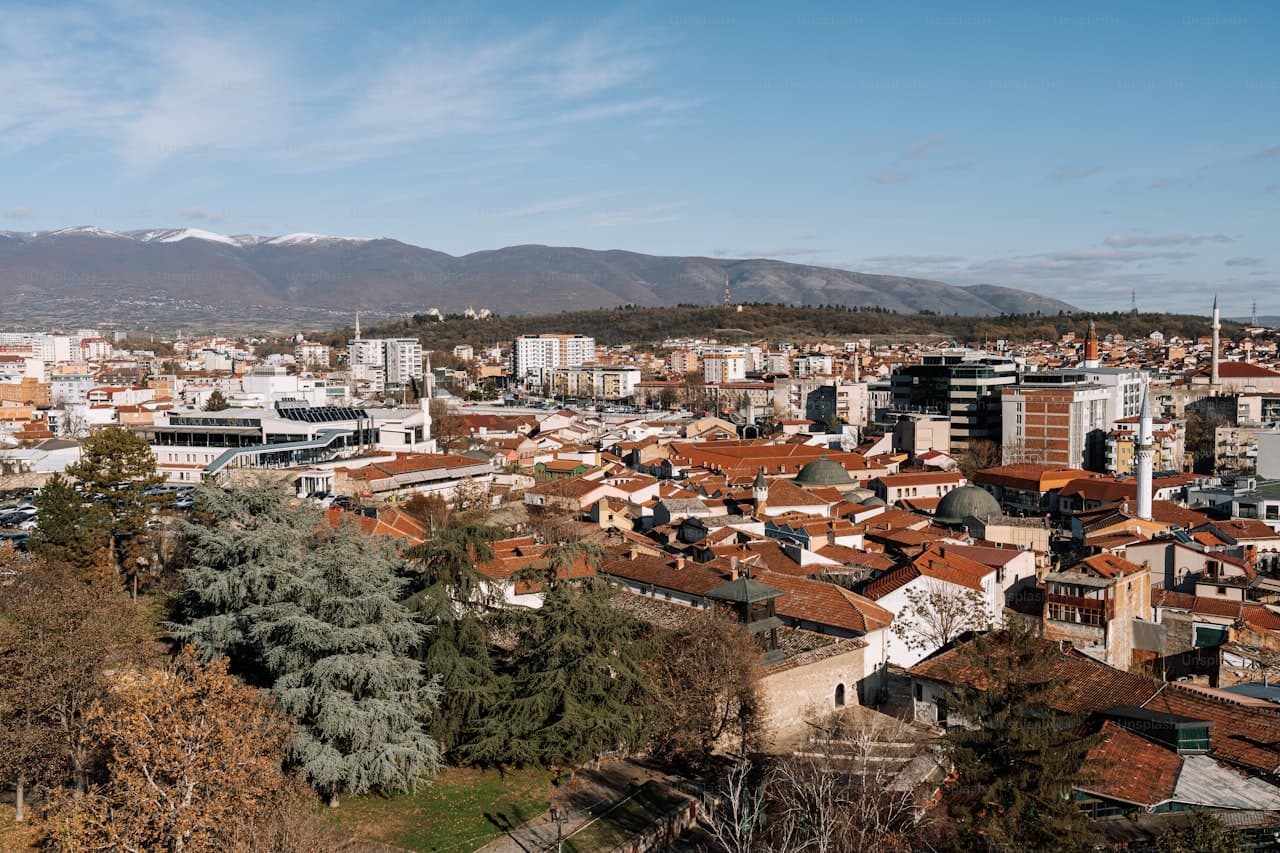
La Regenta was published in two volumes in 1884 and 1885 by Leopoldo Alas "Clarín," a professor of law at the University of Oviedo and the most feared literary critic in Spain (Real Academia Española). It's a 900-page novel set in "Vetusta," a thinly disguised version of Oviedo, the capital of Asturias in northern Spain.
The book scandalized Spain. The Bishop of Oviedo ordered copies burned in public. Clarín received death threats. His former friends in the literary world distanced themselves. What had he done? He'd written an honest portrait of a Spanish city — its corrupt priests, its bored aristocrats, its vicious gossip networks — and everyone recognized themselves.
Why Is It Called "The Spanish Madame Bovary"?
The comparison to Flaubert's Madame Bovary (1857) is inevitable but incomplete. Both novels center on a married woman trapped in provincial life who seeks escape through an affair. Both end in ruin. But the differences matter more:
- Emma Bovary is driven by romantic delusion. Ana Ozores is driven by genuine spiritual longing that society twists into scandal.
- Flaubert blames Emma's reading habits. Clarín blames the entire system — church, aristocracy, and town — that denies Ana any outlet.
- Madame Bovary is 300 pages. La Regenta is 900 — Clarín wasn't interested in efficiency. He wanted to map every social mechanism that crushes a person.
The novel's scope is closer to Tolstoy's Anna Karenina (1878) than to Flaubert: a panoramic portrait of an entire society viewed through the lens of one woman's impossible situation.
For the full methodology behind reading-based language learning, see our complete guide to learning Spanish through reading.
Citation capsule: Leopoldo Alas "Clarín" (1852-1901) was a professor of law at the University of Oviedo, Spain's most influential literary critic, and the author of La Regenta, widely regarded as the greatest Spanish novel of the 19th century (Encyclopaedia Britannica).
What Happens in La Regenta? (Full Plot Summary)
The novel unfolds across 30 chapters split into two halves. The first 15 chapters cover just three days — a microscopic examination of Vetusta's social machinery. The second 15 chapters span three years — the slow unraveling of Ana Ozores's life.
The Setup: A Woman Trapped (Chapters 1-5)
Ana Ozores is 27 years old, beautiful, intelligent, and suffocating. She's married to don Víctor Quintanar, the former regente (chief magistrate) of Vetusta — which is why everyone calls her "la Regenta." Víctor is kind but decades older, more interested in hunting and amateur theater than in his wife. Ana has no children, no intellectual outlet, and a city full of people watching her every move.
Her childhood was traumatic. Her mother died young. Her father, a progressive intellectual, raised her with liberal ideas before dying and leaving her to rigid, controlling aunts who treated her like damaged goods. Ana grew up believing she was fundamentally different from the people around her — and she was right, but Vetusta punishes difference.
The Predators: Fermín and Álvaro (Chapters 6-15)
Two men want Ana, and both dress their desire in convenient disguises.
Don Fermín de Pas, the Magistral (cathedral canon), is the most powerful man in Vetusta. Son of a ruthlessly ambitious peasant mother, he climbed the church hierarchy through brilliance and manipulation. He becomes Ana's confessor — her spiritual guide — and uses that access to bind her emotionally. His obsession with Ana is partly sexual, partly about control, and partly about seeing in her the only person in Vetusta who matches his intelligence. He tells himself it's pastoral care. It isn't.
Don Álvaro Mesía is the opposite: a handsome, aging seducer who runs the local Liberal party and has slept his way through Vetusta's aristocracy. He sees Ana as the ultimate conquest — the one respectable woman who has resisted him. He has no interior life. He's pure social surface. But he's patient, charming, and knows exactly how provincial boredom works.
The first half of the novel — 15 chapters covering just three days — maps these two men circling Ana while the entire city watches, gossips, and takes sides.
The Fall: Ana's Surrender (Chapters 16-25)
Ana oscillates between religious devotion (Fermín's domain) and worldly temptation (Álvaro's domain). For years, she resists both. She takes up mysticism. She walks barefoot in a Holy Week procession — an act of genuine piety that Vetusta treats as exhibitionism. The city's women are delighted: the perfect Regenta has made a spectacle of herself.
Fermín's possessiveness intensifies. When he senses Ana slipping away from his spiritual control, he becomes cruel and manipulative. His mother, Doña Paula — one of the great villains of Spanish literature — pushes him to tighten his grip on Ana because their social position depends on their connection to the Quintanar household.
Álvaro, meanwhile, simply waits. He knows that Fermín's intensity will eventually drive Ana away from the church — and toward him.
It works. After years of resistance, Ana sleeps with Álvaro.
The Catastrophe: Death and Abandonment (Chapters 26-30)
The affair is discovered. Fermín, consumed by jealous rage, manipulates Ana's husband Víctor into challenging Álvaro to a duel. Víctor — who is brave but old and not a fighter — is killed. Álvaro, the seasoned seducer, flees Vetusta immediately. He doesn't look back.
Ana is left utterly alone. Her husband is dead. Her lover has abandoned her. The church rejects her. The entire city turns its back. In the devastating final scene, Ana goes to the cathedral seeking Fermín's forgiveness. He turns away from her in disgust. As she lies collapsed on the cathedral floor, the altar boy Celedonio — the lowest figure in the church hierarchy — leans down and kisses her on the lips. It's one of the most disturbing endings in European literature: the woman who sought transcendence receives only violation.
Why La Regenta Is Perfect for Spanish Learners
Reading La Regenta in adapted form gives you access to vocabulary and cultural concepts that few other novels provide:
1. Social Vocabulary You'll Use Every Day
The novel is obsessed with social dynamics — gossip, reputation, hypocrisy, appearance versus reality. This means constant exposure to words like murmurar (to gossip), aparentar (to keep up appearances), hipocresía, envidia (envy), venganza (revenge), traición (betrayal), and vergüenza (shame). These aren't literary artifacts. They're core vocabulary for any conversation about people, relationships, and social situations.
2. Church and Religious Vocabulary
Even if you're not religious, understanding Spanish culture requires knowing terms like catedral, sacerdote (priest), confesión, pecado (sin), penitencia (penance), obispo (bishop), canónigo (canon), and misa (mass). La Regenta uses these terms in context, which makes them stick in ways a vocabulary list never will.
3. Emotional and Psychological Language
Clarín is a psychological novelist. His characters don't just act — they feel, doubt, rationalize, and deceive themselves. Reading adapted versions trains you in emotional vocabulary: angustia (anguish), soledad (loneliness), deseo (desire), culpa (guilt), desesperación (desperation), celos (jealousy).
4. The Asturian Setting
Vetusta is Oviedo, and Clarín's descriptions of northern Spain — the rain, the mountains, the narrow streets, the cathedral — give you a rich sense of Spanish geography beyond Madrid and Barcelona. If you ever visit Asturias, you'll recognize the landscape from the novel.
For more on how reading builds vocabulary faster than traditional methods, see our guide to graded readers for Spanish learners.
Ready to start reading?
Eppika adapts real bestsellers to your level — with tap-to-translate, audio narration, and vocabulary tracking built in.
Find My Reading LevelKey Vocabulary from La Regenta
Here are 15 terms you'll encounter repeatedly in adapted versions — all useful beyond the novel:
| Spanish | English | Why It Matters |
|---|---|---|
| el catalejo | telescope/spyglass | Fermín's telescope is the novel's central symbol — surveillance disguised as spiritual care |
| el canónigo | canon (church title) | Understanding church hierarchy is key to Spanish history and culture |
| el provisor | vicar general | Fermín's title — it means he runs the diocese's legal affairs |
| la siesta | afternoon nap | The novel opens with the city napping — Clarín weaponizes this cultural detail |
| murmurar | to gossip/murmur | Vetusta's primary activity; you'll use this verb constantly |
| aparentar | to keep up appearances | The verb that defines Restoration Spain |
| la envidia | envy | The engine driving Vetusta's social cruelty |
| el pecado | sin | Central to Ana's psychological torment |
| la confesión | confession | Both religious sacrament and tool of manipulation |
| los celos | jealousy | Fermín's defining emotion |
| el deber | duty | What Ana's society demands in place of happiness |
| la vergüenza | shame | What Vetusta inflicts on anyone who breaks its rules |
| el desengaño | disillusionment | A key concept in Spanish literature from the Golden Age onward |
| la hipocresía | hypocrisy | Clarín's central accusation against Spanish society |
| el amante | lover | Both Álvaro's role and the word that seals Ana's destruction |
How to Read La Regenta by CEFR Level
Elementary (A1-A2): The Adapted Version
At this level, you'll read a simplified retelling that preserves the core story: Ana's loneliness, Fermín's obsession, Álvaro's seduction, and the catastrophic ending. The language uses present and past simple tenses, short sentences, and high-frequency vocabulary. On Eppika, the Elementary adaptation runs roughly 4,000-5,000 words — readable in 2-3 sessions.
Strategy: Focus on the characters and their motivations. After each chapter, write one sentence answering: What does this character want? That simple exercise builds comprehension and vocabulary simultaneously.
Intermediate (B1-B2): The Full Adapted Version
The Intermediate version adds complexity: longer sentences, multiple past tenses, subjunctive mood in key scenes, and more social and emotional vocabulary. You'll get the full psychological depth of Fermín's manipulation and Ana's internal conflict. The adaptation runs 8,000-10,000 words.
Strategy: Pay attention to how characters speak differently. Fermín uses religious language to disguise desire. Álvaro uses social language to disguise emptiness. Ana shifts between both registers depending on who she's talking to. Noticing register shifts is a B2 skill that transfers directly to real-world Spanish.
Advanced (C1): The Literary Adaptation
The Advanced version preserves Clarín's style — his long, winding sentences, his ironic narrator, his use of free indirect discourse (where the narrator's voice blends with a character's thoughts). This is near-original Spanish with modernized spelling and light simplification of the most archaic passages.
Strategy: Read the opening chapter aloud. Clarín's prose has a rhythm — sardonic, measured, almost musical. Reading aloud trains your ear for literary Spanish and builds fluency in ways silent reading cannot.
If you're deciding between this and other Spanish classics, compare with our guides to Niebla by Unamuno and Dona Perfecta by Galdos — two more 19th-century novels available at multiple levels on Eppika.
Historical Context: Restoration Spain
Understanding La Regenta requires knowing what "Restoration Spain" means. In 1874, the Bourbon monarchy was restored after years of political chaos — a republic, a military coup, and a brief reign by an Italian prince. The Restoration (1874-1931) brought stability but also stagnation: a two-party system that took turns governing through rigged elections, a Catholic Church with enormous social power, and an aristocracy that had lost its purpose but not its privileges.
Clarín saw this system up close. As a professor at the University of Oviedo, he watched the church, the political elite, and the provincial bourgeoisie operate as a closed loop of mutual protection. La Regenta is his dissection of that loop — and the people it crushes.
The novel was so accurate that Oviedo's residents recognized themselves in its characters. The Bishop ordered copies burned. Clarín was socially ostracized. It took decades for the city to forgive him. Today, there's a statue of Ana Ozores in the center of Oviedo, and the novel is the region's greatest cultural export.
La Regenta vs. Other Spanish Classics: Where to Start
| Novel | Author | Year | Pages | Difficulty | Best For |
|---|---|---|---|---|---|
| La Regenta | Clarín | 1884 | 900 | B2 (original) | Social vocabulary, psychology, church/society dynamics |
| Madame Bovary (in Spanish translation) | Flaubert | 1857 | 350 | B2 | Comparing French and Spanish literary traditions |
| Don Quijote | Cervantes | 1605 | 1,000+ | C2 (original) | Foundational cultural literacy, humor, archaic Spanish |
| Niebla | Unamuno | 1914 | 280 | B2 | Metafiction, philosophical Spanish, shorter read |
| Fortunata y Jacinta | Galdós | 1887 | 1,100 | B2 | Madrid setting, class dynamics, naturalism |
La Regenta sits in a sweet spot: it's the highest-quality 19th-century Spanish novel, but its adapted versions are accessible from A1. It gives you everything Madame Bovary does, but in Spanish — and with 600 extra pages of social observation that Flaubert never attempted.
Frequently Asked Questions
What Is La Regenta About?
La Regenta (1884-1885) by Leopoldo Alas "Clarín" is the story of Ana Ozores, a young woman trapped in a loveless marriage in the provincial Spanish city of Vetusta (a fictionalized Oviedo). She's caught between two men — a manipulative priest and a cynical seducer — while the entire city watches, gossips, and ultimately destroys her. It's a sweeping indictment of religious hypocrisy, provincial cruelty, and the social machinery that punishes women for the desires it provokes in them.
Is La Regenta Really the Spanish Madame Bovary?
The comparison is common but limited. Both novels feature a married woman who has an affair in a provincial town and faces devastating consequences. But Clarín's novel is three times longer, far more sociologically detailed, and places more blame on society than on the protagonist. Ana Ozores is also a more sympathetic character than Emma Bovary — she's intelligent, self-aware, and genuinely searching for meaning, not merely chasing romantic fantasies. A better comparison might be Tolstoy's Anna Karenina.
How Long Is La Regenta?
The original novel is approximately 900 pages, split into two volumes of 15 chapters each. Volume 1 covers three days in Vetusta. Volume 2 covers three years. Adapted versions for language learners are significantly shorter: the Elementary version on Eppika is roughly 4,000-5,000 words, readable in 2-3 sessions.
Is La Regenta Difficult to Read in Spanish?
The original text is approximately B2-C1 on the CEFR scale. Clarín writes in 19th-century literary Spanish with long sentences, free indirect discourse, and extensive social description. The vocabulary is not archaic (unlike Don Quijote), but the sentence structures are demanding. Adapted versions make the story accessible from A1-A2.
Who Was Leopoldo Alas "Clarín"?
Leopoldo Alas y Ureña (1852-1901) was born in Zamora but spent most of his life in Oviedo, where he served as professor of law at the University of Oviedo. Under the pen name "Clarín" (meaning "bugle" or "clarion"), he became Spain's most powerful literary critic — feared and respected in equal measure. He published La Regenta in 1884-1885 and died at just 49. Despite writing only one major novel, that novel is enough to place him among Spain's greatest authors (Encyclopaedia Britannica).
Is La Regenta on the AP Spanish Literature Exam?
No, La Regenta is not among the 38 required texts on the AP Spanish Literature and Culture exam. However, it's widely taught in university-level Spanish literature courses and is essential reading for anyone studying 19th-century Spanish naturalism. Its themes connect directly to works that are on the AP list, including Don Quijote and works exploring gender and social power.
Start Reading La Regenta at Your Level
La Regenta is one of those rare novels that earns every page of its 900-page length. It's also proof that great literature doesn't have to be inaccessible. Here's your action plan:
- Try the excerpt above. If you understood the Elementary passage, you're ready to start.
- Pick your level. Elementary for the story, Intermediate for the psychology, Advanced for Clarín's devastating prose.
- Read the first five chapters. The opening — Fermín on the tower, the city sleeping below — is one of the greatest set pieces in Spanish literature. If it hooks you, the rest won't let go.
Clarín wrote a novel about a woman who wanted more than her world would allow. A century and a half later, La Regenta still has the power to make you angry on her behalf. That's the sign of a great book — and a great reason to read it in the language it was written in.
Read the adapted version of La Regenta at your level on Eppika