
House of Bernarda Alba: Reading Guide for Spanish Learners
Federico García Lorca finished writing La casa de Bernarda Alba in June 1936. Two months later, fascist soldiers murdered him near Granada. He was 38. The play wasn't performed until 1945 — nine years after his death — when it premiered in Buenos Aires, far from the Spain that killed its author.
Why does this matter if you're learning Spanish? Because Lorca's final play is one of 38 required texts on the AP Spanish Literature exam. In 2025, 27,266 students took that exam, and 70.3% scored 3 or higher (College Board). Beyond exam prep, the play's themes of repression, patriarchy, and freedom remain painfully current. And because it's a dialogue-driven drama — not a 400-page novel — it's one of the most accessible classic Spanish texts you can read.
This guide gives you an act-by-act breakdown, the vocabulary you'll actually encounter, and a plan for reading it at your CEFR level.
TL;DR: La casa de Bernarda Alba is Lorca's final play, written weeks before his assassination in 1936. It's one of 38 required AP Spanish Lit texts. Adapted versions make it readable from A2 onward.
Over 70,000 learners use Eppika to build reading habits with adapted books — real bestsellers matched to your level, with tap-to-translate and audio built in.
Find your reading level →What Is The House of Bernarda Alba and Why Does It Matter?
Lorca's last play is one of the most performed Spanish-language dramas in the world, translated into over 40 languages since its 1945 Buenos Aires premiere. La casa de Bernarda Alba is one of the 38 required texts on the AP Spanish Literature exam.
Lorca wrote the play in 1936 as the final part of his "Rural Trilogy" — three works about women trapped by tradition in rural Spain. The first two are Bodas de sangre (Blood Wedding, 1932) and Yerma (1934). All three explore what happens when desire collides with social expectation. But Bernarda Alba is the starkest, the most realistic, and the most claustrophobic.
The setup is simple. An aging widow named Bernarda Alba imposes eight years of mourning on her five adult daughters after their father's death. No one leaves the house. No one talks to men. The doors stay shut. But desire doesn't follow orders, and the youngest daughter, Adela, refuses to obey.
What makes this play exceptional for Spanish learners isn't just its literary status. It's the language. Lorca writes clean, modern, emotionally direct Spanish. There's no archaic vocabulary to decode, no Baroque sentence structures to untangle. If you've struggled with Golden Age texts like Lazarillo de Tormes, Lorca's prose will feel like a relief.
For the full methodology on reading in Spanish, see our complete guide to learning Spanish through reading.
What Happens in Each Act?
The play has three acts that follow a classic rising-tension arc — from imposed order to explosive rebellion. With 636 million Spanish speakers worldwide and 24 million actively studying the language (Instituto Cervantes, 2025), Bernarda Alba remains one of the most widely studied Spanish-language plays.
Act 1: The Cage Closes
The play opens after the funeral of Bernarda's second husband. Bells ring. Mourners leave. Bernarda immediately declares eight years of strict mourning: "During the eight years of mourning, not a breath of air will enter this house." The five daughters — Angustias (39), Magdalena (30), Amelia (27), Martirio (24), and Adela (20) — are sealed inside.
The only link to the outside world is Pepe el Romano, a young man from the village. He's engaged to Angustias — the eldest and richest, thanks to her inheritance from Bernarda's first husband. But it's Adela, the youngest, who actually attracts him. She breaks her mourning fan in a quiet act of rebellion. The audience sees the trap forming.
Act 2: Cracks Appear
Tensions escalate. Adela grows bolder in her defiance, while Martirio watches with bitter jealousy — she also wants Pepe. The servants gossip freely, and Bernarda's control begins to slip. A village woman who had a child outside marriage is dragged through the streets. Bernarda shouts to kill her. Adela grabs her stomach and whispers to herself, horrified.
Why does this scene matter? Because Lorca is showing you what happens to women who break the rules in this world. The punishment isn't abstract — it's a mob.
Act 3: The Breaking Point
Night. Adela sneaks out to meet Pepe. Martirio catches her and raises the alarm. Bernarda grabs a shotgun and fires into the dark. Believing Pepe is dead, Adela goes to her room and hangs herself. But Pepe escaped — the shot missed. Bernarda's final order is the same word that opened the play: "Silencio!" She commands her remaining daughters to tell the village that Adela died a virgin.
Appearances over truth. Silence over grief. It's the play's thesis in a single word.
What Four Themes Should Every Spanish Learner Understand?
Grasping Bernarda Alba's themes builds cultural fluency that goes far beyond a single play. The concept of honra (honor) alone shows up across Spanish literature, from the medieval Lazarillo to modern-day news. These cultural ideas remain alive in everyday conversation.
Honor and Reputation (Honra)
If you read our Lazarillo de Tormes guide, you already know honra — the gap between how things are and how they appear. In Bernarda Alba, honra is weaponized. Bernarda doesn't mourn her husband out of love. She mourns because the village expects it. She doesn't care whether Adela died happy — she cares that the village believes Adela died "pure."
This obsession with reputation over reality is a thread running through centuries of Spanish culture. You'll encounter it in Don Quijote, in La Regenta, in contemporary Spanish media. Learning to recognize honra in Lorca gives you a permanent lens for reading Spanish.
Patriarchal Authority
Here's the paradox: there are no men on stage. Not one. Yet men control every decision. Pepe el Romano drives the entire plot without ever appearing. Bernarda enforces a patriarchal code more strictly than any man could. The play asks: when women internalize repression, who is actually in charge?
Repression vs. Freedom
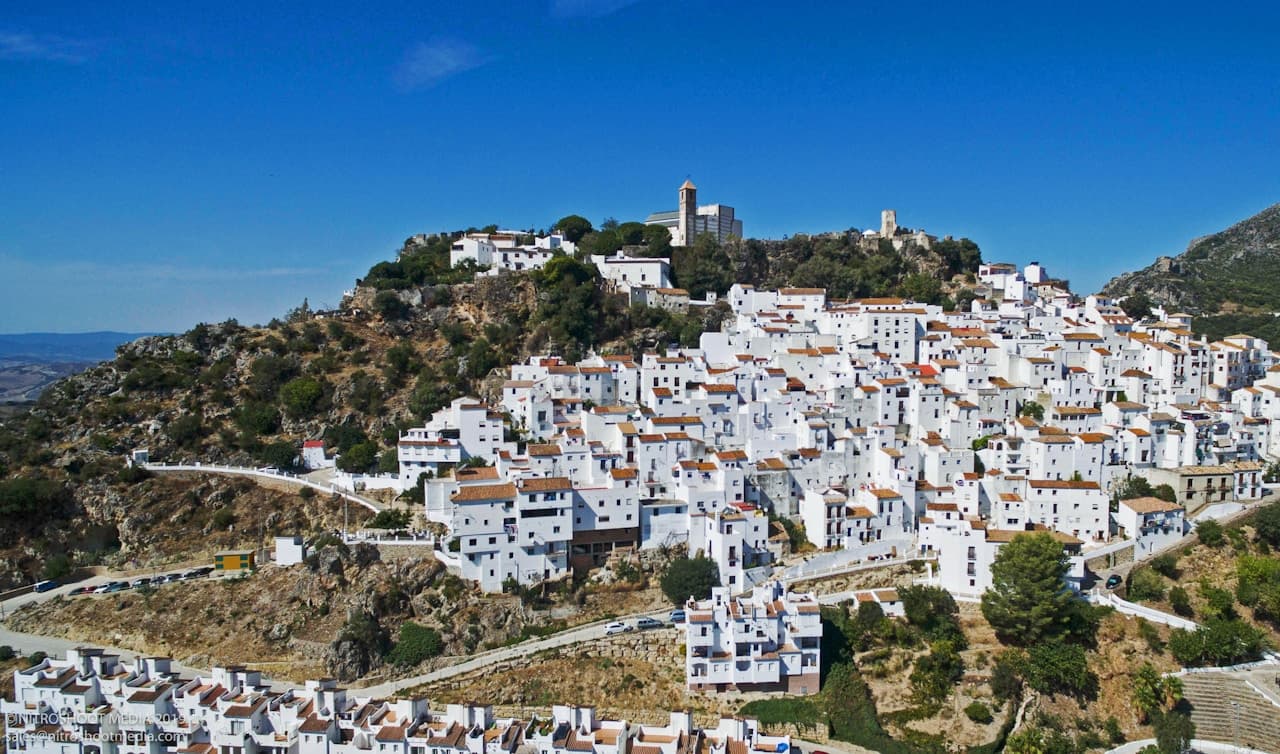
Lorca fills the play with spatial metaphors. The house is white — like a prison, like a bleached bone. Doors are locked. Windows have bars (rejas). The walls are thick. Outside is the street (la calle), which represents freedom, sexuality, life. Every time a character looks toward the door, it's a moment of longing. This is rich territory for learners because the vocabulary of confinement and escape transfers directly to everyday Spanish.
Class and Gender
Bernarda's family has money and status. The servants don't. This class divide shapes every interaction. Poncia, the head servant, knows all Bernarda's secrets but can never challenge her openly. The daughters have more wealth than freedom. Lorca shows a world where gender and class create overlapping cages — and where the women at the top are barely freer than those at the bottom.
Citation capsule: Lorca was assassinated on August 19, 1936, at age 38 — just weeks after completing La casa de Bernarda Alba. The play premiered nine years later in Buenos Aires in 1945, making Lorca the most-translated Spanish writer after Cervantes.
What Essential Vocabulary Will You Find in The House of Bernarda Alba?
Lorca's vocabulary is modern, direct, and emotionally charged — far easier than 16th-century texts. The table below lists 15 key words you'll encounter repeatedly.
| Spanish | English | Notes |
|---|---|---|
| luto | mourning | Bernarda imposes 8 years of luto — this word appears constantly |
| honra | honor/reputation | The force driving every major decision |
| reja | window bars | Symbol of imprisonment; also means "grate" |
| vara | rod, staff of authority | Bernarda's vara represents her power |
| soltera | unmarried woman | A loaded word in rural Spain — carries stigma |
| criada | servant/maid | Poncia and other servants who observe everything |
| decencia | decency | What Bernarda claims to protect |
| encerrar | to lock up, confine | The central action of the play |
| pueblo | village, people | Both the place and public opinion |
| pretendiente | suitor | Pepe el Romano is the pretendiente |
| costura | sewing | What the daughters do all day — busywork disguised as duty |
| maldición | curse | Bernarda cursing her daughters' desires |
| vergüenza | shame | What Bernarda fears more than death |
| calle | street | Represents freedom and the outside world |
| silencio | silence | The play's first and last word |
Why Lorca's Spanish Is Great for Learners
Unlike Lazarillo de Tormes with its archaic spellings and Baroque-era prose, Lorca writes in 20th-century Spanish. His sentences are short. His vocabulary is concrete — doors, walls, water, heat, night. The dialogue sounds like people actually talking, complete with interruptions, insults, and emotional outbursts.
Can you already read a newspaper article in Spanish? Then you can read Lorca. The challenge isn't vocabulary — it's metaphor. Learning to spot when la calle means "freedom" or el agua means "desire" is the real skill this play develops.
Ready to start reading?
Eppika adapts real bestsellers to your level — with tap-to-translate, audio narration, and vocabulary tracking built in.
Find My Reading LevelWhat Spanish Level Do You Need to Read This Play?
The original text of La casa de Bernarda Alba sits at roughly B2–C1 on the CEFR scale. That's more accessible than it sounds — Lorca's language is modern, and the dialogue format means shorter sentences and more natural speech patterns.
At A2 (Elementary), simplified versions reduce the play to its core scenes using basic vocabulary and short sentences. You'll understand the plot, the characters, and the central conflict without getting lost in metaphor. It's a solid first encounter with the story.
At B1–B2 (Intermediate), adapted editions keep Lorca's distinctive dialogue while smoothing out the densest metaphorical passages. This is the sweet spot. You get the emotional power of the original language with enough support to keep reading comfortably.
At C1+ (Advanced), read the original. It's only about 60 pages. The stage directions alone — Lorca's descriptions of light, color, and silence — are a masterclass in descriptive Spanish. This is also the version AP Spanish Literature students study.
Looking for more beginner-friendly texts? See our list of the best A1 Spanish books for beginners.
How Should You Read Bernarda Alba as a Spanish Learner?
Extensive reading research overwhelmingly supports reading full texts — not just textbook excerpts — for language acquisition. A meta-analysis by Nakanishi found that learners who read graded texts extensively scored significantly higher across all skill areas, with an effect size of d=1.48 (Nakanishi, TESOL Quarterly, 2015).
Here's a five-step approach tailored to drama:
Step 1: Read the English Summary First
Use the act-by-act breakdown above. Knowing the plot lets your brain focus on language instead of guessing what happens next. This isn't cheating — it's how polyglots actually read.
Step 2: Read One Act at a Time
Don't try to finish the whole play in one sitting. Each act is roughly 20 pages. Read one, then pause. Let the vocabulary settle. Come back the next day for Act 2.
Step 3: Pay Attention to Stage Directions
Lorca's acotaciones (stage directions) are written in rich descriptive prose. They'll teach you vocabulary for colors, sounds, emotions, and physical spaces. Don't skip them just because they're not dialogue.
Step 4: Read Dialogue Out Loud
This is a play. It was written to be spoken. Reading the dialogue aloud helps with pronunciation, rhythm, and intonation. Try reading Bernarda's lines in a commanding tone and Adela's in a frustrated one. You'll internalize the emotional register of the language.
Step 5: Watch a Performance After Reading
Several Spanish-language productions are available on YouTube. Watch one after you've read the play. You'll be surprised how much you understand — and how the actors' intonation helps you hear what you missed on the page.
Compare your reading app options in our guide to the best reading apps for language learning in 2026.
Why Read a Play Instead of a Novel?
Plays offer specific advantages that novels don't — especially for language learners. At roughly 60 pages, La casa de Bernarda Alba is a fraction of the length of novels like Don Quijote. That brevity matters. Lorca is the most-translated Spanish-language author after Cervantes, and the play's compact format is part of the reason it's taught so widely.
It's Short Enough to Finish
Most language learners abandon books halfway through. A 60-page play eliminates that problem. You can realistically finish Bernarda Alba in a week of 20-minute reading sessions. That sense of completion builds momentum.
Dialogue Teaches Conversational Patterns
Novels are full of narration. Plays are almost entirely dialogue. Every line in Bernarda Alba models how Spanish speakers construct commands, express emotion, interrupt each other, and argue. You're practicing conversational Spanish without realizing it.
Stage Directions Build Descriptive Vocabulary
Lorca's stage directions describe light, color, temperature, and sound. You'll learn words for concrete sensory experiences — the kind of vocabulary that textbooks rarely cover but that makes your Spanish sound natural.
It's Culturally Foundational
Lorca is to Spanish literature what Shakespeare is to English. Knowing his work gives you reference points that come up in conversation, media, and formal education across the Spanish-speaking world. Quoting Lorca — even casually — signals cultural literacy.
Ever wondered why some learners plateau after studying grammar for years? It's often because they haven't read enough real texts. Here's why reading beats flashcards for Spanish acquisition.
Frequently Asked Questions
Who Was Federico García Lorca?
Federico García Lorca (1898–1936) was Spain's most celebrated poet and playwright of the 20th century. He was murdered by nationalist forces during the Spanish Civil War on August 19, 1936, at age 38. His body has never been found. His works, including Romancero gitano, Bodas de sangre, and La casa de Bernarda Alba, are read and performed worldwide.
Is The House of Bernarda Alba on the AP Spanish Exam?
Yes. It's one of 38 required texts on the AP Spanish Literature and Culture exam. In 2025, 27,266 students took this exam, with 70.3% scoring 3 or higher (College Board). AP questions typically focus on themes of repression, honra, and the symbolic use of space.
Is the Play Based on a Real Person?
Yes. Lorca based Bernarda Alba on a real woman named Frasquita Alba Sierra, who lived in the village of Valderrubio near Granada. Lorca's family home was next door, and he observed the household dynamics as a child. He told friends that the play was "a photographic document" — though he clearly added symbolic and dramatic layers.
Can Beginners Read This Play in Spanish?
Yes, with an adapted version. Simplified editions use controlled vocabulary and shorter sentences to make the core story accessible at A2 level. Research shows learners need 95–98% lexical coverage for independent comprehension (Nation, Canadian Modern Language Review, 2006). Adapted graded versions hit that threshold.
What Is Lorca's Rural Trilogy?
Lorca's "Rural Trilogy" consists of three plays exploring women's oppression in rural Spain: Bodas de sangre (Blood Wedding, 1932), Yerma (1934), and La casa de Bernarda Alba (1936). All three feature female protagonists trapped by social codes around honor, marriage, and motherhood. Bernarda Alba is the most realistic of the three and the only one with no poetic or supernatural elements.
Start Reading La casa de Bernarda Alba at Your Level
The House of Bernarda Alba is one of the most efficient texts you can read as a Spanish learner. Here's what to take away:
- Start at your level. Adapted versions exist for A2 through C1. You don't need advanced Spanish to experience Lorca's story.
- Learn the vocabulary. Words like luto, honra, silencio, and encerrar appear constantly in Spanish literature and culture — not just in this play.
- Use the five-step method. Read the English summary, then one act at a time in Spanish, then watch a performance. At B2+, read the original unabridged text.
The play is short, intense, and culturally foundational. Lorca finished it weeks before his death. Nearly a century later, its themes of repression and resistance still resonate — and its clean, modern Spanish makes it one of the best entry points into Spanish-language drama.
Read the adapted version of La casa de Bernarda Alba at your level on Eppika